
BOOKS: Hot New Ancient History Releases!: January
If improving your reading is your goal for 2016, you’ve come to the right place! Here are our hot new ancient history releases for January!
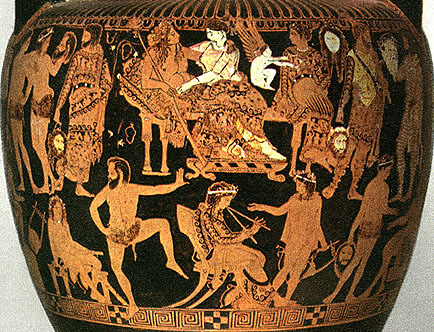
The Transformation of Athenian Theatre Culture around 400 BC
The Transformation of Athenian Theatre Culture around 400 BC By Klaus Junker The Pronomos Vase and its Context, edited by Oliver Taplin and…
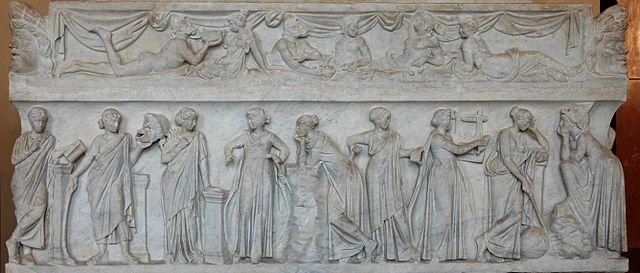
Which Greek Muse are You?
Of tragedy, or comedy? Perhaps poetry or epic story or erotic poetry.
How Ancient Greek Plays Allow us to Reconstruct Europe's Climate
The open air plays of the ancient Greeks may offer us a valuable insight into the Mediterranean climate of the time, reports new research in Weather.
The Education of Demea in Terence’s Adelphi
The aim of this thesis was to gather an in-depth understanding of the changes in the role of the Roman father during the Middle Roman Republic by analyzing a play called The Adelphi by Terence.
Seeing One's Way: The Image and Action of Oidipous Tyrannos
To find ours, let us step back once more and examine Sophokles’ use of words. At a glance we notice a great deal of words related to sight in Oidipous Tyrannos . Roughly twice as many appear to us here than in the Antigone. The number picks up once more where Oidipous makes his final appearance in Oidipous at Kolonos. We can draw little more from this than that seeing and Oidipous are connected, fundamentally connected.
Speculations of the Death of Roman Theatre
These mimes were centered around themes of murder and adultery: the amount of indecency was incredible. In a warped sense of Realism, emperors could command a real sex act to take place on stage.
Seneca
In two contrasting versions of the play Oedipus, one by the Roman Seneca, (3 BCE-65 CE), and another written about 500 years earlier by the Greek Sophocles (497-406 BCE) there are notable contrasts
The Greek Achievement: The Birth of Classicism
This article is based on a lecture delivered at the The Greeks Institute, a series of lectures presented to secondary school teachers in the Bridgeport Public Schools during the spring of 1989. Co-sponsored by the Connecticut Humanities Council, Sacred Heart University, and the Bridgeport Public Schools, the purpose of the institute has been to provide teachers with an interdisciplinary exploration of classical Greece for the purposes of professional enrichment and curriculum development.
How did the ancient Roman Theatres sound?
With the advantage of modern computers and room acoustic simulation software, today we can get further information about theatres by modelling them in a virtual environment.